Blog

Foundations: Target and Process vs. Person and Context. Or… “how I learned to kick ass and take names while also getting the girl.”

Today we will be discussing the foundations of a good agent and the training associated with creating such individuals.  Essential to this is the mentality to approaching situations that could be blurred by fear, adrenaline, or traditional social norms.  The idea is to focus on effective points of concentration and not on the emotional context.  Let’s look at two situations a cold war era spy might find themselves in:  Physical Combat and Manipulative Seduction.

First, a hand-to-hand fight.  Lots of garbage exists in this area.  There are “soft” approaches, “hard” approaches, and even eccentric ways that involve “secret energies.”  These are able to come into popularity because A.) Most people will never have to actually engage in an actual life or death physical fight so there are a lot of fake stories where people claim to successfully  used a particular method(s).  B.) Many techniques look to anatomically be sound in theory.  With a good theory justifying them (joints moved beyond 30 degrees break, stimulation of the vagus nerve causes central nervous shutdown, 8 lbs of pressure will collapse the kneecap, etc.) people will assume a method works since essentially there is a good enough reason in place for why they should work. C.) The style or delivery mechanism is appealing to the practitioner and since they like it, will find reasons to justify continuing to use it.  This is confirmation bias at its finest.

So how do we train spies to fight?  We simply break down to the essential processes that do actually work and then focus on the targets that enable us to carry out these processes.  Here’s what we know works: 1.) In order for me to hurt my opponent, I need to offensively inflict damage on them 2.) Certain spots on the body are more susceptible to injury than others 3.) Adrenaline, fear, tension, fatigue, injury, and other factors significantly reduce fine motor skills in combatants 4.) Techniques against resisting opponents rarely are executed flawlessly 5.) Violent acts tend to escalate as they continue to go on, i.e. the longer the fight goes the more violent the participants will become in the absence of fatigue kicking in.  Now if we train someone in how to survive a fight we could apply these principles to create a process that: trains offensively (I would rather throw my body weight into a forearm strike to the neck as a reaction instead of trying to block a punch thrown at me as blocks rarely inflict injury to my opponent), focuses on hitting only a few vulnerable areas (less choice means faster decision making), uses basic movements, accounts for imperfect execution, and has techniques that begin much more violently in nature than your opponent, i.e. I am intending to kill or cripple my enemy instead of trying to knock them out.  This last point is important as human beings are give-and-take escalation machines by nature.  For instance, you push me, I push you back harder, you slap me, I push your throat, you punch me, I punch you back, you tackle me, I elbow you, you headbutt me, I dig at your eyes.  This is time consuming and we can get into an extended scuffle. How about alternatively we chose a “switch” mentality.  In such a mindset, I do nothing to you physically until I get to the point where I choose to impart significant injury on you.  For instance, you push me, I attempt to verbally deescalate.  You push me again, I decide whether or not you are in that moment a physical threat and if you are…..I go to the final stage and grab your head with the inside cradle of my left elbow and force my right thumb through your eye socket. I skip levels, you don’t, I successfully inflict damage, you take it. The other part of this is eliminating the “humanity” of your opponent.  As a society, we are taught to try to understand the reason why someone is acting in a certain manner and also to sympathize with other people.  This is not useful for us as it can lead to a fear response or a hesitation.  Instead we need to adopt a target mentality.  In front of me is not a person, but an anatomical set of targets that I need to engage in order to find victory. This shift in thinking does wonders when facing intimidating people or when you have to overcome the feeling that you are inflicting unjustified violence on someone.

Now onto seduction.  Yes some cold war era spies were trained in the craft of seduction.  It’s really not complicated.  Let’s again look at process and what we know works.  Women who will be “won over” statistically will need to be A.) highly attracted to the person B.) trust the person to at least to a limited extent C.) be comfortable with how that person is perceived by her social network D.) not in conflict with her current situation or at least not interfering with her current situation. So again let’s invert this into a training system.  Such an approach would mean we train spies to act behaviorally attractive (dominant body language, excellent social skills, demonstrating status, using social proof) and selecting individuals assigned to such assignments who are physically good looking (in some cases researching past relationships of the target girl and finding someone who “fits her type” behaviorally and physically). With trust, it means manipulating the person by associating with a common dislike (a sort of shortcut for trust such as when people will trust each other when discovering they both dislike a particular political party), having multiple short interactions in multiple locations, and having consistency verbally (however inconsistent behaviors can often result in an increase in attraction, a whole different topic though).  The next factor, social network comfort is a variable factor depending on how much the woman cares about how she is perceived.  In the U.S. most college grads date other college grads from similar socioeconomic backgrounds as subconsciously they fit into each other’s “tribes”.  However this is not always the case.  For the most part though, it helps to have a character that mirrors her background and social status. The last part of this, not being in conflict with current situation, is actually very easily overcome by a process of isolation.  Discrete time isolated means that a woman will not have to worry about the interaction affecting her current situation (marriage, in a relationship, in a government job that does not allow for dating foreigners, etc.)  A woman in continuous one-on-one situations with a man that goes uninterrupted can be easily manipulated in many cases to do things she would not normally do.  Just recently, my old boss (a woman) had certain tasks that required her to spend a significant amount of time with one individual in isolation (a deviant man who she would interview for information).  They sparked up an affair and as a mother of two she left her husband of ten years to be with this fella after only a dozen or so individual, isolated sessions. This was obviously also against every organization policy in place and significantly put it at risk.  She was separated from the organization and essentially through away a 15 year career for a bum. Isolation when properly used is so powerful that it can make someone destroy their marriage and permanently screw up their kids to be with someone as in this case.  This was also a trained professional that this worked on.  As such, forget all the seduction books out there, and focus on getting the target woman isolated in a comfortable way as often as you can.

One final note, as with hand-to-hand fighting,  social awkwardness and nervousness could work against someone in a seduction situation.  Remember to think in terms of target and process, it’s just another skeleton covered in muscle and flesh and a little bit of makeup.  Makes it easier than thinking that a woman is beautiful than trying to spark up a conversation.


BRWB05216CED08D_000038(1).jpg

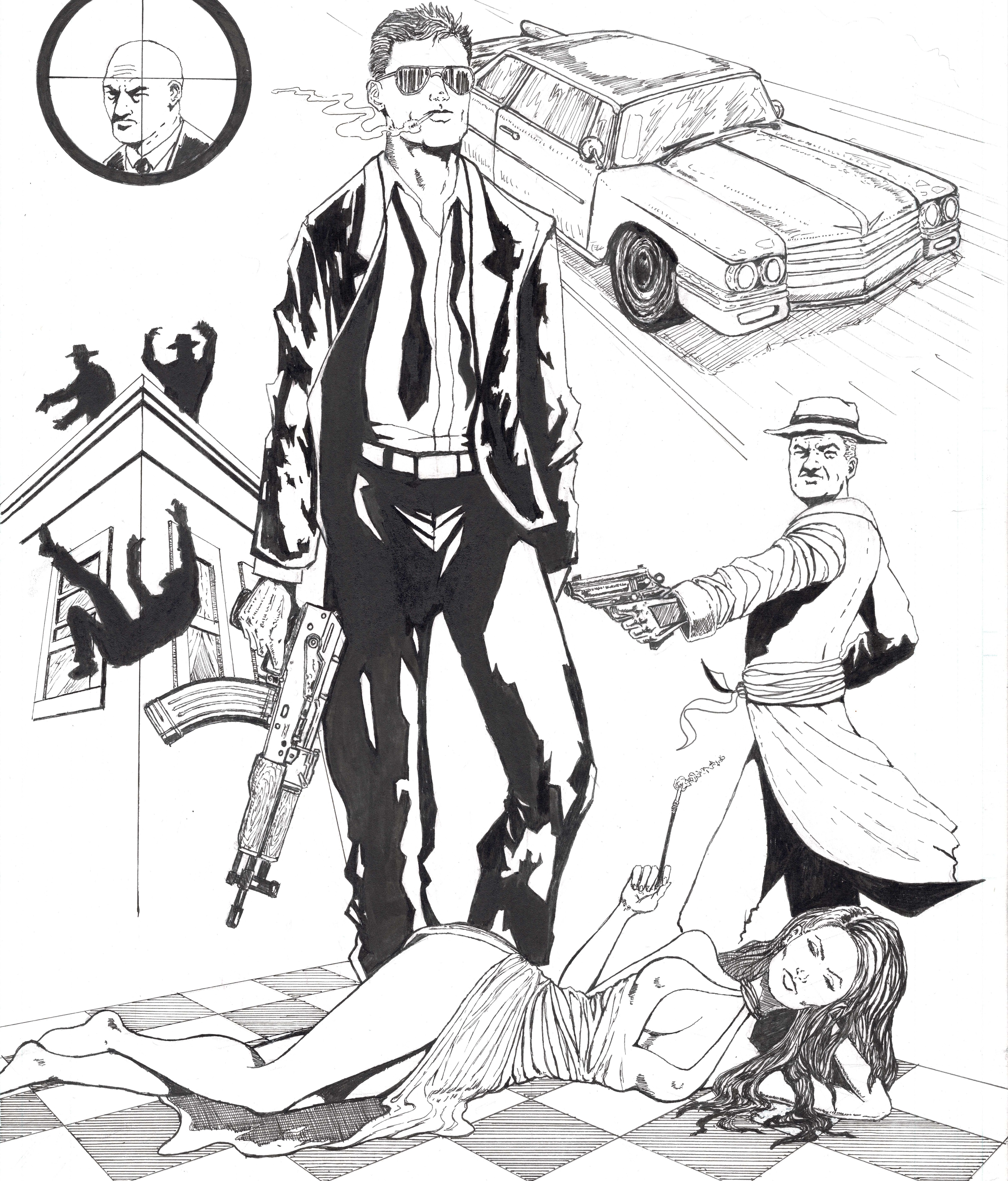
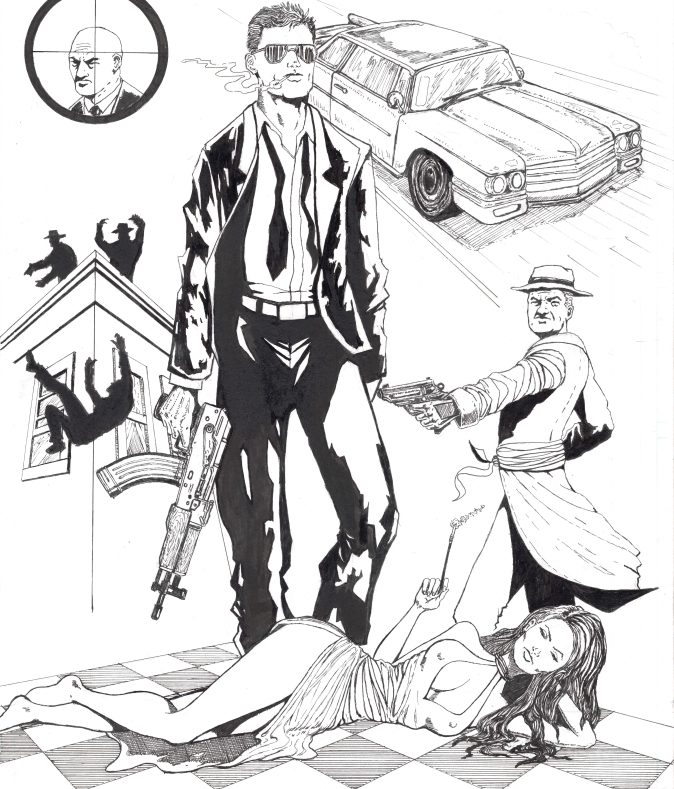
Support my upcoming graphic novel, “Smoke, Drink, Spy” which is a fictionalized account of Cold War Spycraft at:  patreon.com/smokedrinkspy
“Stop! How to Use One Breakthrough Spy Tip to Deal with the Insurmountable.” Spycraft Tips and Tricks #1

BRN3C2AF445C395_000010In our first session of Spycraft Tips and Tricks, we’ll cover a technique that is so simple in  nature that it is easily discarded by most yet is devastatingly effective.   When overwhelmed in the moment, whether it is being suddenly captured, having the indigenous  informant you recruited turn you into the local authorities, or suddenly being shot at from a rooftop, you need something to help you survive the moment.  What you’ll learn today can be divided into three separate parts, the last one perhaps being the most powerful, least known trade secret a spy could learn (though these days I’m not even sure they teach it anymore as it is an “old school” technique).  But first, we need to understand something called the training matrix.
A training matrix determines the best way to empower an agent to deal with the full spectrum of situations he may encounter in the course of his operations.  As such, it look sat what is likely to happen, likely not to happen, and what how much is known about the circumstances.  Everything is then divided into the known knowns (what is verified as reality), known unknowns (what we are sure that we don’t know but can speculate probability of), and the unknown unknowns (recognition that shit happens).  Our training then becomes divided into three categories to deal with each:

  1. Known Knowns.  Specific procedures precisely geared to deal with the circumstance.
  2. Known Unknowns. Standard Operating Procedures (SOPs) that are a sort of “if, then.” If situation A happens, then immediately do action B.  This is the crux of what is called “foundational” training and encompasses most of the training an agent goes through.  (I’ll talk about foundational training at a later time and delve into how present day operators are finally being taught the most solid foundational training through a lot of lessons learned over the past few decades). These are the training drills done over and over that make reactions to situations almost subconscious in nature.  It is faster to act than think and almost all situations can fall into the Known Unknown category when operations are mostly “on plan.” However, when things go wrong, we then must learn to deal with…….
  3. Unknown Unknowns.  Training here then involves systematized thinking in that agents need to have an effective approach to problem solving. These are the WTF moments you tell your fellow spy buddies  about when you’re 80 years old in a Thai bar over shots of rum. For instance, you’ve been trained to shoot identified suicide bombers on site as they approach your checkpoint. But now you realize it’s the local friendly mentally challenged kid your unit sometimes plays soccer with and the Taliban have strapped him full of explosives and told him to go hang out with his American friends because they have ice cream for him.  So now here comes a naive, bomb laden 13 year old whose got a remote detonator some terrorist controls from an unknown location.  Oh did I mention they have him holding his 1 year old little brother?  To resolve this quickly, you need methods of problem solving.  So this is where we will start talking about our initial step in reacting to situations you don’t have a specific solution to.  Though this post will not reveal an entire problem solving paradigm taught to agents, it will give you one very useful method.

The first part of this three tiered approach is a mental stop.  Three count pause.  Remember, ideally you would have an instant reaction and SOP to act out so there would be no need for a pause, but circumstances have given you a situation that falls outside the scope of “if,then.”  So despite the desire to act without hesitation, you recognize this is not something you are prepared for.  So you mentally count to three. You then make a decision. Then you mentally pause again for five seconds.  Then you either act on the decision or pivot to another decision and act.  While 8 seconds is a lifetime in high stress situations, acting without thinking at all in a realm that you have no training in is worse.  A very practical application of our 3 pause, 5 pause is interrogation.  While many may believe that standard practice is to state nothing more than name, rank, and number, this is an impracticality that exists more in fantasy than reality.  So, agents are taught to answer questions, just very carefully. You get asked something, you consciously pause for three counts, start a sentence, pause for 5 while continue considering further what to say, and then say it.  Funny enough, pauses before answers make you seem more believable to interrogators.  Also, if trained well enough in this process, even the influence of drugs and pain will enable you to carefully say your words.  Really this is a good conversational practice anywhere as there are many people spouting off at the mouth without really thinking through what they say.  Also, if you’ve ever met the “strong silent type”, consider if they really spoke less than everyone else or if they naturally just allowed a few moments to pass before answering or speaking.  So now on to part two….

OODA loops.  Really this is just a variation of the 3 pause, 5 pause but with a little more focus.  OODA loop thinking will also lead us nicely into the final, most effective part of the techniques that follows.  What is OODA? It stands for Observe, Orient, Decide, Act. Developed decades ago by military man John Boyd, OODA has been proven effective in many combat arenas (actually documented to be used by fighter pilots in dog fights more than in the spy game). So let’s dive into using this.  First of all, let’s Observe.  This means shit hits the fan and you have to first of all, stop for a moment and literally observe.  You need to figure out what is going wrong.  Where is the gunfire coming from, who is here who is not supposed to be, what caused communication to suddenly stop, etc.  You are focusing on abnormalities.  Some useful tips: scan right to left (we read left to right and can fall into a subconscious pattern of “going through the motions” whereas move right to left improves our observation ability) and look for verticals that don’t match horizontals (most environmental scenes are either mostly full of vertical objects or horizontal objects.  So if your in the Northeast part of the U.S. full of vertical trees, you would look for horizontal objects that are not naturally occurring).   We want to avoid acting without have a complete enough picture on which to properly act upon.  Now we need to Orient. The good news is you are on the second step to success on this four step loop.   The bad news, this step is the sum total of you preparing various checklists, problem solving paradigms, or mental models well in advanced of you being in this situation.  Let’s look at one or two to help you out though. We’ll utilize the simple concept of a 5 why problem solving model. Your goal is to find root cause of the crap that’s happening so we can act upon it. You’re taking fire from a rooftop across the street. Why? Because the enemy  feels they have an advantage over you and suddenly feel brave. Why? Because your unit appears vulnerable to them. Why? Because they are in an elevated position with superior numbers. Why? Because the enemy was able to stage there without direct observation.  Why? Because that building has a back ally that leads from an open field to a ladder that goes to the rooftop.  Now it is quite possible that you won’t get all the way through all 5 whys given the pressure and limited time frame but the idea is to get to the root cause of what’s going on. Knowing that the enemy is using a particular route to move into firing positions is a little different from just shooting back at the muzzle flashes. Now we Decide. Here it is a matter of quickly determining the best course of action using all the information you have observed and deduced. Sticking with the rooftop fire example, you could decide to return suppressing fire and retreat to regroup or call in an artillery strike or circle behind the building to the field at the beginning of the enemy’s route or utilize suppressing fire and use precision point fire to pick the enemy off one by one from your current position.  Once a decision is made, you must Act. This means moving with no hesitation to carry out the plan in a violent swift manner.  No second guessing here. You may in fact have made the wrong decision but even a bad choice carried out with full commitment is better than a great choice done half-hardheartedly. Now it is this action, or rather the moment of pre-action that we get to our third dynamic: process simulation.

Process simulation.  I’ve heard it referred to as mind loading, mental flashing,  and dynamic visualization.  No matter what the name, process simulation is so simple yet so effective.  Essentially it is to always picture yourself doing the act you are about to do perfectly a split second before doing it. Now this is different than slow, meditative visualization you do in a relaxed state. This is a conscious effort to focus, while under stress, on executing.  You’re about to take part in a life and death struggle, you might want to take that one second to flash a picture of your success to let your mind know the proper outcome.  THIS SIMPLE TECHNIQUE MAKES A TREMENDOUS DIFFERENCE IN CARRYING OUT ACTIONS IN A HIGH STRESS SITUATION.  The best operators and agents do this naturally.  Ironically, so do the best athletes. Wrestling coaches have spoken about why some people can consistently take there opponents down while others with the same physical abilities and technique training cannot.  It turns out that during the execution of the takedown, top wrestlers mentally flash an image of their success.  This split second visualization aligns the mind and body as one and practically ensures optimal operation for at least a few moments.  So whether you’re in a hand-to-hand fight to the death or about to do a door entry on a compound, use process simulation.  Do it. Do it every single time you need to execute something in a highly intense situation. It will make a tremendous difference in outcome.

There you have it, Spycraft Tip and Trick #1: Let’s call this one, the Tactical Pause.

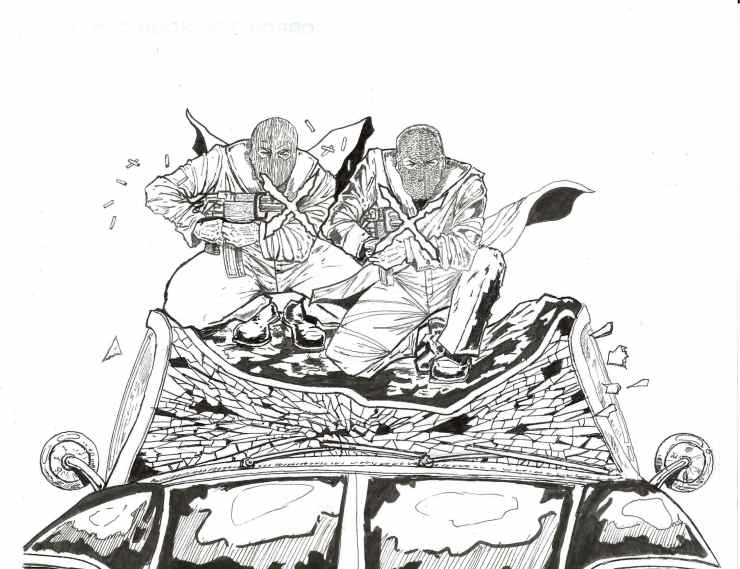
Keep an eye out for my upcoming graphic novel: Smoke, Drink, Spy (of course) that shows a fictionalized account of these concepts in action.


“What Happens When You Play the Cold War Spy Game?”

Bang. You just pulled the trigger on your gun.  You quickly tuck the weapon under your jacket, take a deep breath, remember to look 360 degrees around you for any irregularities, and make a decision on which one of your 3 departure routes is now the best option.  The tension in your mind as you think, “wow I actually did it” isn’t allowed to rise beyond a level of mere curiosity because those thoughts are quickly replaced with “I’ve got to get out of here, and fast.” You purposely move slower than you want because they’ve taught you over and over that the biggest problem you’ll have is not realizing how much you will tend to rush and how your speech rate will almost double.  This visible  nervousness is the quickest way to be a suspect; the quickest way to end up in a cell somewhere.  You didn’t know the target. You just knew who he was, where he was, and how you were going to get the job done.  You don’t remember if your hand was shaking or your pulse was racing before the moment of truth but you can’t help but think “the training worked.” You saw him, you followed him nonchalantly, waited until he was alone in the museum hallway like they said he would be, closed the window curtains,  attached the silencer to your pistol, and in one smooth motion……walked behind him, raised the gun to his head, pulled the trigger, and kept walking.  They taught you headshots at close range, never stop moving, don’t even look to see if the body drops because you just popped them at the base of the skull which means you don’t waste even a second to confirm.  You keep moving at any cost but in a smooth, steady manner.  You know that no one will react for 5 – 10 seconds which gives you enough time to walk out the hallway, take a left at the stairs, and walk out the east building exit onto market street.  You know that despite what you think, the psychologists at the Center have assured you that the crowd will be too interested trying to  get to the place they heard the noise from and know what’s going on to even notice you walking smoothly away in the opposite direction.  That word again, smooth. 3 days later and your plane will touch down in L.A. and you’ll finally feel a sense of relief, finally rid yourself of the fear of getting caught.  You trained for years for something like this, and now you’ve actually done it.  You can never talk about it, but now back at the Center, you will know that you are one of the “real” operators who has done an actual mission, not some imposter whose only experience is training scenarios at the shooting house.  Time to go home now.  Time to sleep for the first time in days.  Time to go forward for the rest of your life with a new self-imposed identity: Spy.

The days of the Cold War were interesting ones for spies.  The tried and true methods Special Operations Executive (SOE) and Office of Strategic Services (OSS) that served men well throughout the end of World War II were well in existence.  However, these men were about to embark on a new change.  Instead of relying on guts and savvy to accomplish assassinations and gather information, it became much more effective to leverage the local populace and develop sleeper networks to gather intelligence through a network.  Yet, the old school craftsmen of yesteryear could barely fathom such concepts.  After all, they had taken down enemies by undercover covert operations, pinpoint yet brutal acts of violence, and personal skills that made them into weapons of their countries.  It is their stories, in the passing twilight of their time, that is the stuff of legends.  The scenario above was suddenly becoming less and less common and the  agencies were changing into a place where analytical brains, not brass-ball guts, made you a valuable asset.  But those days are the stuff of spy novels and action movies. Join me as we honor this glorious age of spies through “Smoke, Drink, Spy.”cropped-brwb05216ced08d_0000251.jpg